
Why TMC Rebels Split Seems Normal?
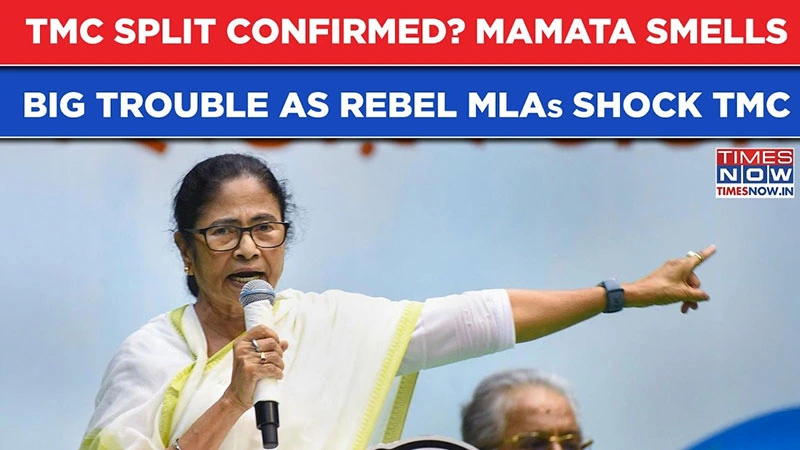
A dramatic TMC Rebels Split has officially triggered a historic political breakdown in the state of West Bengal. The ongoing chaos is no longer surprising news for local voters, as it has become a daily reality in West Bengal politics news.
Prominent leaders are cutting ties with the former ruling party every single day, while state police forces are simultaneously arresting key political figures daily.
This internal mutiny reached a boiling point when a massive group of 58 dissident lawmakers revolted against the party hierarchy. This sudden development has permanently altered the power balance inside the state assembly.
Who Leads the New Rebel Faction?
- New Legislative Leader: The TMC Party Rebellion formally chose veteran politician Ritabrata Banerjee as the new Leader of the Opposition (LoP). According to reports by The Hindu , the Assembly Speaker accepted this change after the bloc crossed the required two-thirds majority mark.
- Complete Disassociation: The rebel faction officially declared that their newly formed parliamentary group has absolutely no connection with Abhishek Banerjee.
- The Arrogance Factor: Rebel leaders are openly slamming the party’s top leadership, citing extreme arrogance and an aggressive corporate style of functioning as primary reasons for the fallout.
What Sparked the Abhishek Banerjee Corruption Probe?
| Key Event | Current Status | Impact on Bengal Politics |
| Rebel Accusations | MLAs openly protest internal dictatorship | Splits the party’s core vote base |
| Police Investigation | Administration starts official inquiry | Weakens the general secretary’s grip |
| Financial Scams | Deep scrutiny over institutional corruption | Heightens public anger before elections |
The state police administration has officially launched a highly publicized investigation into the severe Abhishek Banerjee corruption allegations.
As detailed by Hindustan Times, this legal crackdown marks a catastrophic low point for the internal stability of the ruling regime.
Why Did the TMC Rebels Split Just Now?
The sudden emergence of this dissident camp raises critical questions among political analysts and ordinary citizens alike:
- Sudden Enlightenment: Why did these rebel leaders suddenly experience a profound political awakening today?
- Old Allegations: Are any of these TMC scam secrets exposed actually a surprise to the public or the media?
- The Simple Answer: No. The public, the media, and these very politicians have known about these deep-rooted issues for years.
What is the Real Reason Behind the TMC Dissident MLAs?
To understand this sudden shift, observers must look closely at the opportunistic nature of West Bengal politics news.
The sudden political awakening of these dissident leaders is not accidental. Instead, it relies entirely on a calculated mix of political survival and shared benefits.
The strategy behind the TMC Rebel MLAs highlights how politicians handle immense institutional pressure.
Why Did the TMC Party Rebellion Stay Silent for So Long?
- The Protective Umbrella: As long as these TMC rebel MLAs stayed inside the ruling party, the state machinery and party apparatus protected them. Leaving the party means losing their primary legal and political shield.
- The Distribution of Spoils: Many politicians choose to ignore institutional corruption in Bengal because they actively benefit from the corrupt system. Their conscience only wakes up when the party sidelines them or denies them election tickets.
- The Fear of Central Agencies: The sudden rebellion often peaks when central investigative bodies, like the Enforcement Directorate (ED) or the Central Bureau of Investigation (CBI), accelerate their ongoing probes. You can track the timeline of these agency actions on the official Enforcement Directorate portal.
Why Are the Dissidents Only Targeting Abhishek Banerjee?
| Politician Targeted | Strategy Used | Main Political Reason |
| Abhishek Banerjee | Direct, aggressive attacks | Protests his corporate style and the new youth wing power |
| Mamata Banerjee | Complete avoidance of blame | Spares her to respect her massive personal public popularity |
Targeting the general secretary while sparing the Chief Minister is a highly calculated political move. By focusing purely on Abhishek Banerjee corruption allegations, the rebels can protest the shifting internal power dynamics of the party.
Concurrently, this strategy allows them to avoid a direct conflict with Mamata Banerjee’s immense public support. Most importantly, it keeps a back door open for a potential return to the party fold in the future.
Is the Trinamool Congress Split Just Opportunistic Politics?
The sudden outrage from these dissident leaders reveals a deep layer of double standards. When you look at individual tracks, the timeline of their conscience perfectly aligns with lost power, party demotions, or fear of central investigators.
The Case of Kakoli Ghosh Dastidar: Why the Sudden Shift?
- The Trigger: Kakoli Ghosh Dastidar recently started speaking out against institutional corruption in Bengal. But did this realization only happen after she lost her influential post as the Lok Sabha Chief Whip?
- The Narada Past: She has been a long-term trusted ally of Mamata Banerjee. However, voters remember her prominent appearance in the Narada Sting Operation, where she was caught on camera accepting cash.
- The Recruitment Scam Silence: During the height of the massive West Bengal school recruitment scam, she chose absolute silence. She never raised a voice internally, nor did she resign on moral grounds. Many analysts classify this purely as highly opportunistic politics.
Did the Rebel Leaders Know About the Scams All Along?
The truth is, almost every major face in the TMC Rebel MLAs camp has a deeply compromised past regarding TMC scam secrets exposed.
| Leader Name | Past Association / Controversy | When Did They Turn Rebel? |
| Kunal Ghosh | Former close aide to the Abhishek Banerjee camp | Admitted on media channels like ABP Ananda that he knew about recruitment scams while in jail. |
| Sukhendu Sekhar Ray | Senior Parliamentarian | Began publicly disagreeing with the party line around the tragic RG Kar incident. |
| Ritabrata Banerjee | Expelled CPI(M) leader, now the rebel LoP | Joined TMC in 2018 and managed trade unions despite knowing all internal corruption details. |
| Javed Khan | Veteran MLA with immense personal property | Joined the rebel camp recently with his son, likely to wash away past financial scrutiny. |
Does Joining the Rebellion Cleanse Their Past Crimes?
- Convenient Blindness: It is impossible to believe that these veteran politicians knew nothing about Abhishek Banerjee corruption allegations or party scams before this year.
- Shielding Assets: Leaders like Javed Khan, who face massive public scrutiny over vast properties, are using the rebel platform as a political shield.
- The Reality Check: Joining a dissident faction does not minimize their past involvement. Instead, it proves that many rebels were directly or indirectly part of the very institutional system they now claim to fight.
Would the TMC Rebel MLAs If They Had Won the 2026 Election?
The harsh reality of West Bengal politics news points to a singular motive: power.
If the Trinamool Congress had successfully won the 2026 West Bengal Legislative Assembly election and returned to government, this massive rebellion would likely have never occurred.
Instead of revolting, figures like Ritabrata Banerjee, Javed Khan, and Sandipan Saha would likely be standing in a long line outside Abhishek Banerjee’s office.
They would be actively lobbying for lucrative cabinet minister portfolios rather than protesting internal party dictatorship.
The Power Shift: Why the Rebellion Triggered Now
- The Honey of Power: The shared financial benefits of holding state power historically forced these conflicting factions to stay unified despite intense internal insults.
- The Defeat Effect: The historic TMC Rebels Split only became daily headline news because the party lost state governance. You can verify the official seat tallies and landslide shifts on the Election Commission of India portal.
- The Post-Election Collapse: Once the ruling structure collapsed, the protective umbrella vanished. The fear of being left without protection triggered an immediate race for political survival.
How Deep Is Institutional Corruption in West Bengal?
| Media & Institutional Arena | Current Reality and Public Actions | Impact on the Rebel Camp |
| Judiciary Statements | Calcutta High Court judges openly slam systematic corruption | Validates massive public anger against scams |
| Prime-Time Media | Daily evening debates expose deep-rooted financial irregularities | Forces political spokespersons onto the defensive |
| Defensive Tactics | Former party defenders pointed to corruption in other states | Fails to shield the local leadership from ongoing public scrutiny |
Are the Rebel Leaders Clean Themselves?
The general public remains highly skeptical of the sudden moral posturing by these TMC Dissident MLAs. For years, party spokespersons collectively defended the administration against severe allegations.
They even stood firmly behind the general secretary during intensive investigations launched by central agencies.
- Direct Complicity: Are some of these newly turned rebel leaders completely innocent? Absolutely not. Many of them face direct accusations in the exact same financial scandals.
- Washing Past Sins: Their sudden decision to trigger the Ritabrata Banerjee Rebel Faction is widely seen as a desperate attempt to wash away their own past corruption liabilities.
- The Main Motive: By jumping ship to a new legislative bloc, they hope to protect their massive personal assets and avoid being targeted by ongoing state and central corruption inquiries.
Does Moral Ethics Still Exist in West Bengal Politics?
While the institutional fight behind the TMC Rebels Split intensifies, a massive moral crisis looms over the entire political spectrum. Leaders from all sides talk about ethics, but their practical track records tell a completely different story.
In a recent viral interview with India Today, prominent leader Mahua Moitra launched a scathing attack on the dissident camp.
She openly challenged the TMC Dissident MLAs who won their seats using Mamata Banerjee’s identity to immediately resign from their current positions, surrender their government benefits, and contest fresh independent elections to prove their real public worth.
Is Moral Resignation Dead in Modern Indian Politics?
While Moitra’s ethical challenge sounds correct on paper, critics quickly point to a visible lack of personal accountability.
For instance, severe public controversies erupted over her hosting an incredibly expensive, lavish wedding party in the economically struggling rural belt of Karimpur.
Opposition groups openly alleged the heavy misuse of local state police forces and local administrative machinery to manage her private event.
This raises a fundamental query: can any faction truly claim a high moral ground in the current political climate?
| Historic Era of Accountability | Current Era of Political Survival |
| Lal Bahadur Shastri resigned strictly taking moral responsibility for a major train accident. | Ministers consistently refuse to step down despite massive national examination leaks and irregularities. |
| Madhavrao Scindia resigned immediately from office following a tragic state aircraft crash. | The term “moral resignation” has completely vanished from the modern legislative lexicon. |
Why the Top TMC Leadership Share the Blame
The handpicked loyalist leaders who are currently speaking out against the Ritabrata Banerjee Rebel Faction hold zero real-world value because the top ruling leadership has spent years practicing the exact same opportunism.
- Breaking the Opposition: Long before this internal revolt occurred, Mamata Banerjee and Abhishek Banerjee directly engineered the breakdown of opposition-held bodies.
- Forced Defections: The former ruling party continuously destabilized democratically elected opposition teams across key districts like Malda, Murshidabad, and Jhalda to forcefully seize municipal and Panchayat powers.
- The Irony of the Split: Because the top leadership actively normalized defection and party-breaking tactics for years to expand their territory, they hold no ethical right to play the victim card today now that their own party is splitting apart.
Final Thoughts for Knowledge Mart Readers:
The Trinamool Congress Split completely exposes the raw opportunism driving modern politics. These TMC Rebel MLAs did not experience a sudden moral awakening. Instead, they broke away simply because they lost their political power and their legal shield.
For years, they stayed silent and actively enjoyed the benefits of Bengal institutional corruption scams.
Now, this sudden TMC party rebellion is nothing but a desperate race for individual survival. By targeting Abhishek Banerjee and sparing Mamata, they are safely keeping their future options open.
Ultimately, this unfolding West Bengal political crisis proves that when the honey of power vanishes, party loyalty self-destructs instantly.
Check out the exclusive report on Knowledge Mart regarding the political updates.
10 Key Takeaways
- Daily Political Fallout: The massive Trinamool Congress Split has made daily leader defections and high-profile police arrests the normal routine in West Bengal.
- Ritabrata Takes Charge: A bloc of 58 dissident lawmakers broke away to formally appoint Ritabrata Banerjee as the state assembly’s new Leader of the Opposition.
- Rejection of Abhishek: The TMC party rebellion explicitly severed all legislative and political ties with General Secretary Abhishek Banerjee.
- Backlash Against Arrogance: Rebels openly blame Abhishek’s corporate management style and personal arrogance for shattering internal party unity.
- The Protective Umbrella: These TMC dissident MLAs ignored structural scams for years because being inside the ruling party shielded them from legal scrutiny.
- Shared Benefits: The rebels stayed silent because they were directly benefiting from the Bengal institutional corruption scams until they were recently sidelined.
- Calculated Targets: By attacking Abhishek but sparing Mamata, the TMC Rebel Splits masterminds avoid her massive public popularity and keep a back door open for a future return.
- Compromised Backstories: Prominent rebels like Kakoli Ghosh Dastidar (Narada sting) and Javed Khan use this mass defection in TMC to shield their own vast personal wealth.
- Power-Driven Timing: If the party had comfortably won the 2026 state elections, these exact leaders would be chasing cabinet ministries instead of protesting dictatorship.
- Erased Political Morality: The current West Bengal political crisis proves ethics are dead; the top leadership is simply facing the same defection tactics they used for years to crush opposition panchayats.