
What Is the Real Crisis of Opposition in Bengal?
When the BJP had to seek court permission for its “Paribartan Yatra” on 27 February, it exposed a deeper issue – the growing Crisis of Opposition in West Bengal.
Today, many observers argue that the democratic space for opposition parties has narrowed sharply. From court battles to street protests, the political landscape reflects rising tension ahead of the 2026 Assembly election.
How Has Opposition Space Shrunk in West Bengal?
The opposition in West Bengal faces what many describe as a structural crisis.
When opposition leaders repeatedly approach courts just to organize rallies, critics say democracy itself feels constrained. Reports suggest that Suvendu Adhikari had to move the court more than 100 times to hold meetings and protests.
As a result, many citizens now feel that they depend more on the judiciary than on the administration to exercise democratic rights. This trend raises serious questions about political balance in the state led by Mamata Banerjee.
Ironically, Mamata Banerjee herself rose to prominence because she once had a strong opposition space to challenge the ruling establishment.
How Does Administrative Crackdown Intensify the Opposition Crisis?
Several recent incidents have intensified the debate.
During the BJP’s “Nabanna Abhijan,” police reportedly blocked the Second Hooghly Bridge with containers, iron barricades, and heavy deployment. Similarly, police used batons and water cannons against a CPM rally.
Even job aspirants protesting for recruitment faced baton charges and arrests.
Critics argue that such actions point toward a pattern where dissent faces administrative resistance. The Crisis of Opposition becomes visible when democratic protests repeatedly meet force.
What About the Singur Movement?
History presents a striking contrast.
During the Singur agitation, protesters blocked the Durgapur Expressway for days. At that time, then Chief Minister Buddhadeb Bhattacharjee reportedly chose restraint over police force.
The Singur movement later became a turning point in Bengal politics and significantly strengthened Mamata Banerjee’s rise to power in 2011.
Therefore, many analysts argue that earlier governments did not completely eliminate opposition space, even during intense movements.
Is Attack on Opposition a Political Tradition in Bengal?
Political violence is not new in Bengal. Many still recall the police firing during the 21 July Mahakaran Abhijan in the 1990s.
However, critics say the current situation appears different.
Today, opposition parties, student activists, and even job seekers often struggle to reach protest venues near Nabanna. Several tragic incidents have added to concerns:
- The death of Maidul Islam Midya during a youth protest march in 2021
- The death of SFI activist Sudipta Gupta in 2013
- Alleged attacks on leaders like Khagen Murmu
- The reported attack on the convoy of J. P. Nadda in South 24 Parganas
- In Chandrakona and other places, attacks on Suvendu Adhikari allegedly involved both ruling party workers and police
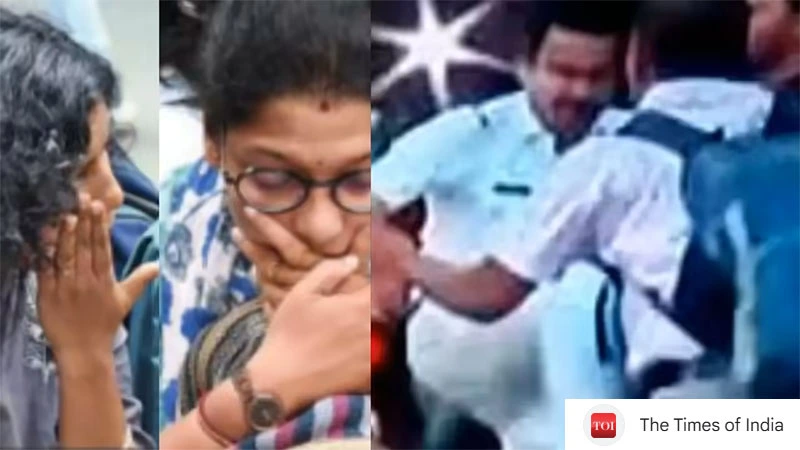
- Police allegedly kicked a teacher in a protest march who had lost jobs in SSC scam, in Kasba.
Each incident fuels the perception that the Crisis of Opposition is deepening.
Mamata Banerjee came to power with the slogan “Bodla noy, bodol chai.” However, critics now question whether that promise of democratic restoration has weakened over time.
Can a United Opposition Solve Such Attack om Opposition?
At present, the opposition remains fragmented.
The CPM cannot align with the BJP due to ideological differences. Meanwhile, the National Congress has also denied to form a broad alliance.
History shows a simple political truth: when opposition votes split, the ruling party gains an advantage.
Therefore, before defending ideology, opposition parties may first need to secure their democratic space. Without political space, ideological battles lose relevance. Nevertheless, the number of winners decide the fate of the Government formation.
Is Governance Being Overshadowed by Political Conflict?
Critics argue that the state government spends significant resources on prolonged legal battles.
Instead, many believe that greater focus should shift toward development, infrastructure, and industrial growth. Welfare schemes like Lakshmir Bhandar and Yuva Sathi may influence voters, but sustainable economic progress requires long-term structural reforms.
Additionally, some observers say the state should ensure smooth implementation of central government schemes rather than engaging in constant confrontation.
Can Peaceful Voting End the Crisis of Opposition in 2026?
No one knows what the 2026 Assembly election results will bring.
However, signs of pre-poll tension are already visible. The Special Intensive Revision (SIR) of voter lists has further intensified political heat. The continuous protests and agitations from the rulers have made it highly tensed. Heavy deployment of central forces signals heightened alertness.
States like Bihar and Uttar Pradesh, once associated with election violence, have conducted relatively peaceful polls in recent years.
So, why can West Bengal not achieve the same?
Ultimately, ordinary citizens want only one thing, just to cast their votes freely and peacefully. Therefore, political parties must learn to respect that basic democratic right.
The real solution to the Crisis of Opposition may not lie in courtrooms or confrontations. It may lie in restoring trust, ensuring fair political space, and respecting the people’s verdict with dignity.
Key Takeaways
- The Crisis of Opposition in West Bengal reflects shrinking political space.
- Court interventions have become frequent for opposition rallies.
- Police action during protests has intensified political debate.
- A fragmented opposition strengthens the ruling party.
- Peaceful and fair elections in 2026 could redefine Bengal’s political future.
People Also Ask (PAA)
What is the Crisis of Opposition in West Bengal?
It refers to the shrinking democratic and political space available to opposition parties to organize rallies, protests, and campaigns freely.
Why are courts frequently involved in political events?
Opposition leaders often seek judicial permission to hold rallies, which indicates administrative restrictions.
Has political violence always existed in Bengal?
Yes, Bengal has a history of political clashes. However, critics argue that the current phase shows a sharper institutional clampdown.
Can unity among opposition parties change the situation?
A united opposition could consolidate votes and strengthen democratic competition.
Will the 2026 election be peaceful?
That depends on political restraint, administrative neutrality, and collective commitment to democratic norms.