
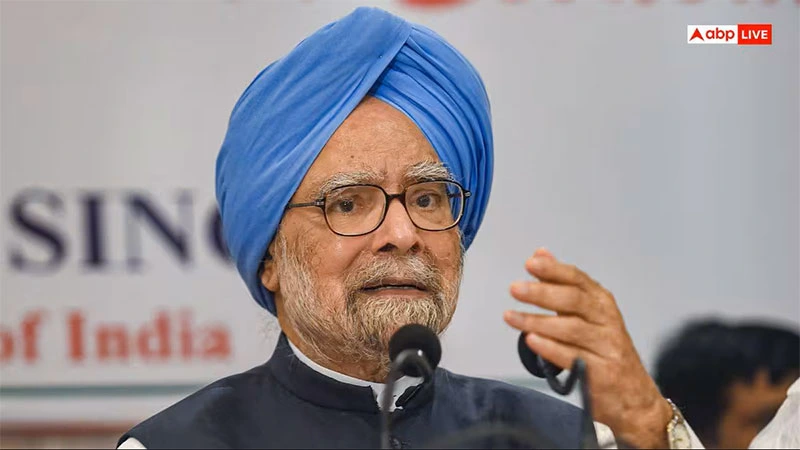
Manmohan Cleared by SC: Should Media Trial Continue?
Manmohan cleared finally! In a long-awaited decision, the Supreme Court of India today officially cleared former Prime Minister Dr. Manmohan Singh of all criminal allegations in the coal block allocation case.
This ruling puts an end to a painful legal battle that dragged on for more than a decade, giving the late Prime Minister a complete and final legal exoneration.
Here is a quick look at how things played out in the courtroom today and why this decision matters so much:
- CBI Closure Reports Formally Accepted: The apex court formally accepted the Central Bureau of Investigation (CBI) closure reports, which gave Dr. Singh a clean chit. The agency’s investigation found no evidence of criminal intent, kickbacks, or abuse of power while he was holding the coal portfolio.
- Trial Court’s 2015 Order Thrown Out: A three-judge bench headed by Chief Justice of India Surya Kant set aside the lower court order that had summoned Dr. Singh as an accused back in 2015. The bench noted that the trial judge had no solid legal ground or evidence to throw out the CBI’s closure findings in the first place.
- Justice Arrives, But Too Late: While the verdict completely clears Dr. Singh’s record, it comes posthumously, ensuring his name is restored in the annals of Indian history. Still, it forces us to ask an uncomfortable question: Was the relentless news coverage back then genuine accountability, or just a politically driven media circus that permanently damaged an honest man’s name?
At Knowledge Mart, we try to look beyond daily political noise to understand what these moments mean for our institutions.
This Supreme Court order isn’t just about closing an old legal file or the former Prime Minister Manmohan cleared. It shows how easy it is for studio outrage and political mudslinging to destroy someone’s reputation years before the legal system ever gets a chance to look at the actual facts.
Coal Scam Timeline: Key Explosive Moments: Manmohan Cleared Finally
| Year | What Happened |
|---|---|
| 1993 | Coal block allocation begins (no auctions) |
| 2004 – 09 | Mass allocations during UPA raise red flags |
| 2012 | CAG exposes Rs. 1.86L Cr “loss” > National outrage |
| 2014 | SC cancels 214 coal blocks, calls process illegal |
| Final Verdict | Courts find weak evidence > Manmohan Cleared by SC |
What Did the Supreme Court Say on the Verdict?
The Supreme Court didn’t mince words after reviewing the CBI’s Section 173 reports. The judges made it clear that after years of digging, investigators found zero evidence pointing to criminal conspiracy or personal gain by Dr. Singh.
A few key points stood out in the court’s reasoning:
- No Real Basis to Reject Closure: The bench noted that the trial judge went overboard by ignoring the CBI’s detailed reports. Courts can’t simply bypass investigative findings based on public noise or gut feeling, there has to be actual proof on paper.
- Cleaning the Record Posthumously: Senior lawyers Kapil Sibal and Abhishek Manu Singhvi pressed the court to completely erase the trial court’s adverse remarks. They argued that even though Dr. Singh isn’t here today, his public record needed to be cleared without any lingering footnotes.
- Case Closed on Merit: The Supreme Court quashed all past summonses and formally wrapped up the entire matter on its legal merits, giving Dr. Singh a complete clean chit.
- A Message to Lower Courts: The bench reminded trial judges that setting aside an investigative agency’s closure report requires solid, undeniable evidence, not broad assumptions influenced by political climate.
| Legal Aspect | Supreme Court Finding & Status | Key Legal Principle Established |
|---|---|---|
| Investigating Agency | Central Bureau of Investigation (CBI) | Primary fact-finding authority in complex federal cases. |
| CBI Agency Findings | Filed two separate, detailed closure reports | No financial corruption, conspiracy, or personal benefit found. |
| Trial Court Error | Rejected closure reports without “cogent reason” | Lower courts cannot act on mere suspicion or public pressure. |
| Apex Court Order | Quashed summons and effaced adverse remarks | Complete restoration of individual honor and legal exoneration. |
| Final Outcome | Manmohan Cleared posthumously of all charges | Posthumous justice remains vital for historical and legal truth. |
If you want to go through the complete background on the court order and legal arguments, check out The Hindu’s Court Coverage or read the Bengali coverage over at Anandabazar Online.
Why Do Political Media Trials Keep Happening?
Watching TV news tear down a leader’s character before a judge even sees the case file is an old story in Indian politics. Prime-time debates, driven almost entirely by daily TRPs, regularly treat unverified claims as absolute facts. Studios turn into kangaroo courts overnight, declaring people guilty long before the defense can even present its side.
We’ve seen this play out time and again over the decades:
- The Bofors Fallout: Back in 1989, Rajiv Gandhi lost the national election following a non-stop media storm over alleged kickbacks in the Bofors gun deal.
- Years of Probing, No Conviction: Decades of police work, court hearings, and international requests followed, but no agency ever managed to prove that Rajiv Gandhi took a single rupee.
- Damage Done Early: Even without a legal conviction, the media narrative did its job, altering elections and ruining personal reputations long before the courts could weigh in.
- Noise Over Facts: Studio shouting matches thrive on sensational leaks and political drama. Complex administrative policies get flattened into simple stories of good vs. evil, completely ignoring due process.
Should news channels really be allowed to run wild with these studio trials?
When prime-time outrage replaces court procedure, public perception gets manipulated before actual evidence is tested. It ends up punishing honest public servants who focus on their work instead of managing media outrage.
Media Trials That Shocked India But Manmohan Cleared
| Case | Who Was Targeted | Media Narrative | Final Verdict |
|---|---|---|---|
| Coal Scam | Manmohan Singh (PM) | “Rs. 1.86L Cr mega scam” outrage | No criminal liability proved |
| 2G Spectrum | A. Raja & UPA Govt | “Biggest scam ever” headlines | All accused acquitted (2017) |
| Aarushi Case | Talwar Parents | Sensational & speculative coverage | Acquitted by HC (2017) |
| Malegaon Blast | Sadhvi Pragya | “Hindu terror” narrative | Charges weakened, ongoing |
| ISRO Spy Case | Nambi Narayanan | Espionage scandal hype | Declared innocent, compensated |
Key Insight: Media narratives move fast on drama, but courts still require solid proof to convict. Can Manmohan Cleared by SC give any message to the Media?
Did History Vindicate Dr. Manmohan Singh?
Between 2012 and 2014, Indian politics was consumed by non-stop corruption charges, mostly triggered by the Comptroller and Auditor General (CAG) reports on 2G spectrum and Coal Block allocations.
Prime-time news shows picked up those reports and ran daily hit pieces against the UPA government. Headlines openly questioned Dr. Singh’s personal honesty, painting routine policy decisions as massive frauds.
Through all that noise, Dr. Manmohan Singh chose to stay quiet and composed. During a rare interaction with reporters near the end of his term, he famously said:
“I believe, history will be kinder to me than the media or the opposition parties”.
Those words feel remarkably accurate today. The highest court in the country has finally cleared away the cloud of suspicion that shadowed his legacy for over a decade.
| Timeline Phase | Key Events & Legal Actions | Media & Public Narrative Status |
|---|---|---|
| 2012 – 2014 | CAG reports released; massive national protests and outrage. | Sensational scam headlines dominate prime-time TV discussions daily. |
| 2014 | CBI completes investigation; files two separate closure reports. | Reports ignored by media; political narrative continues unabated. |
| 2015 | Special Trial Court rejects CBI closure and summons Dr. Singh. | Front-page coverage framing summons as proof of wrongdoing; SC stays order. |
| 2024 – 2026 | Dr. Singh passes away; SC takes up final hearing on closure reports. | Supreme Court formally closes case, quashes summons, and clears name posthumously. |
Dr. Manmohan Singh, a renowned economist, former RBI Governor, and key architect of India’s 1991 economic reforms, passed away before this verdict was delivered.
He didn’t get to hear the Supreme Court clear his name, reminding us how painful it is when legal vindication takes this long to arrive.
Can the Congress Party Benefit Politically Today?
For the Congress party, this Supreme Court clean chit brings real moral relief, though its practical political impact today is a bit mixed:
- Moral Satisfaction: It brings genuine relief to Congress workers who always maintained that Dr. Singh’s personal integrity was spotless.
- A Counter-Argument on Past Framing: Party leaders now have a solid Supreme Court judgment to back up their claim that the “mega scam” narrative of 2010 – 2014 was heavily exaggerated for political advantage.
- A Shifted Political Scene: A lot has changed in Indian politics over the last ten years. Voters and political debates have moved on, so an old legal win doesn’t automatically translate into votes today.
- The Reality of Late Decisions: Since the judgment comes years after the political damage was already done, its impact on elections is fairly limited. It’s a win for his legacy, not an electoral game-changer. Can Congress reap the benefit of Manmohan Cleared?
Alas! Journalist Sumon Chattopadhyay says that Rahul Gandhi still remains as an immature politician, who fails to direct the crowd by fiery speeches or emotions to the ballot box. Watch his video in YouTube.
Is the Fourth Pillar of Democracy Biased Today?
We often call the news media the fourth pillar of democracy, the watchdog meant to hold power accountable without taking sides. But if you compare how news channels covered politics ten years ago versus today, the shift in tone is hard to ignore.
| Media Feature | UPA Era Coverage (2004 – 2014) | Present Day Media Dynamics |
|---|---|---|
| Prime-Time Tone | Aggressive, highly adversarial, continuous scam coverage | Generally supportive of ruling government policies |
| Scrutiny Focus | Direct attacks on the Prime Minister, Cabinet, and bureaucracy | Primary focus on criticizing opposition parties and civil society |
| Journalistic Access | Frequent, unscripted, open press conferences | Highly managed interactions, curated speeches, and formal releases |
| Media Description | Hyper-sensationalist / Studio-driven trials | Partisan polarization / Highly selective outrage |
Why does prime-time coverage look so vastly different depending on who holds power? When newsrooms stop questioning those in authority and focus instead on chasing outrage or defending the status quo, public faith in journalism drops. For those interested in the legal finer points of this case, you can read ongoing coverage on Bar and Bench News.
Should the Present Government Learn From History?
Dr. Manmohan Singh’s tenure as Prime Minister gives us a good look at how a leader can handle aggressive press coverage without losing his cool or undermining democratic norms.
- Taking Unscripted Questions: Dr. Singh regularly held open, unscripted press conferences, answering tough questions from both Indian and international reporters without curated lists.
- Keeping His Composure: No matter how hostile or mocking the questions got, he answered calmly without snapping at reporters or holding grudges.
- Respecting Press Freedom: Even at the height of harsh editorial attacks, his government didn’t cancel media passes, ban journalists, or use state machinery to target critics.
| Leadership / Era | Press Engagement Strategy | Response to Editorial Criticism |
|---|---|---|
| Dr. Manmohan Singh | Open, unscripted, direct press meets | Calm, measured, answered critics directly without retaliation. |
| Modern Political Leadership | Unidirectional broadcasts, selective interviews | Critical reporting frequently meets with pushback or public dismissal. |
Does today’s mainstream media show that same relentless energy when asking tough questions of the current government? Leaders across all parties should remember that managing headlines or leaning on friendly media only works for so long. As Dr. Singh’s legal journey shows, the real facts usually win out in the end.
Knowledge Mart Final Thoughts
This Supreme Court order clearing Dr. Manmohan Singh brings welcome legal clarity, but it leaves behind serious questions about how news channels operate. An honest public servant spent years under a cloud of suspicion, only for the highest court to confirm there was never a crime to begin with.
At Knowledge Mart, we believe noisy media trials do real, lasting damage to democratic institutions. Hyperbolic headlines might generate quick clicks and TV ratings, but they ruin personal standings built over decades of public service.
When newsrooms try to act like courtrooms, real justice takes a backseat. It’s time for news outlets, political figures, and viewers to step back from studio-driven outrage and return to fair, measured, fact-based reporting.
In Conclusion, Manmohan Cleared by SC is not only a headline grabber, but it should redefine the future horizon of Media.
10 Key Takeaways from the Supreme Court Ruling
- Complete Posthumous Clean Chit: The Supreme Court cleared late Prime Minister Dr. Manmohan Singh of all criminal charges in the coal allocation case, restoring his reputation.
- CBI Reports Accepted: The court accepted the CBI’s closure filings, which found zero evidence of kickbacks, bribery, or criminal misconduct after a full investigation.
- 2015 Summons Thrown Out: A bench headed by CJI Surya Kant set aside the lower court order that summoned Dr. Singh, noting there was no valid reason to reject the CBI’s closure report.
- Justice Came Too Late: Because this clearing arrived after Dr. Singh passed away, it serves as a sad reminder of how slow the legal system can be.
- Flaws of Media Trials Laid Bare: The verdict exposes the danger of prime-time news debates pronouncing people guilty long before courts see real evidence.
- His 2014 Words Came True: Dr. Singh’s belief that history would be kinder to him than the press or opposition has now been validated by the Supreme Court.
- Moral High Ground for Congress: While it won’t drastically alter election results today, the verdict gives the Congress party strong moral standing regarding the UPA years.
- A Clear Shift in Media Scrutiny: The difference between how the media treated the UPA government versus how it covers current leadership highlights changing journalistic standards.
- A Lesson in Handling Criticism: Dr. Singh’s open press meets and calm demeanor remain a strong example of how democratic leaders should handle public criticism.
- A Push for Responsible News: The case shows why news outlets need to stick to verified facts instead of running sensationalized studio trials for ratings.