
Key Highlights
- The Bengal SIR Crisis continues with no clear indication of timely completion.
- The Special Intensive Revision (SIR) process has triggered statewide political tension.
- Voter name deletions occurred in 12 states, with higher numbers in Uttar Pradesh and Gujarat than in West Bengal.
- Despite fewer deletions, West Bengal has witnessed the highest unrest.
- Polling booths have faced attacks in multiple localities during the SIR process.
- RAF deployment in relatively calm areas like Khardah indicates deteriorating law and order.
- Election Commission errors and procedural lapses have been acknowledged.
- State administration response appears weak, allowing street-level unrest to grow.
- Local political leaders face ticket insecurity, intensifying competitive aggression.
- Muscle power and vote control have emerged as key factors in political positioning.
- Police and administrative neutrality is questioned due to alleged political influence.
- The crisis has moved beyond state boundaries, becoming a national media focus.
- The rule of law is under scrutiny, raising concerns over electoral integrity.
Bengal SIR Crisis shakes Democracy
The Bengal SIR crisis is continuing without any pause. There is no clear sign that it will end soon. In fact, the SIR process may not finish within the fixed deadline.
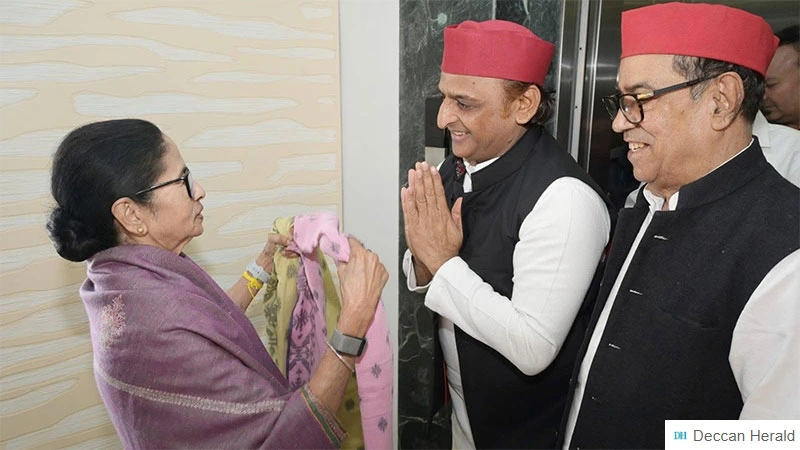
Meanwhile, Akhilesh Yadav visited Bengal and met Mamata Banerjee. After the meeting, he openly praised her leadership.
Why SIR can not grab national focus in other states?
In Akhilesh Yadav’s own state, the Special Intensive Revision voter list process reportedly removed nearly 27 million names from the draft voter list. But how many meetings or protest marches happened there over this issue?
The reason is fear. There, the administration immediately surrounds any protest. After that, it does not hesitate to use batons.
Some may argue that a democracy cannot suppress democratic rights. However, they also claim that street politics does not reduce public suffering.
Now, SIR is underway in 12 states. The highest number of deletions happened in BJP-ruled Uttar Pradesh and Gujarat. In comparison, West Bengal saw fewer deletions.
Why Bengal SIR Crisis turns explosive?
Yet, West Bengal is witnessing the most unrest. The Bengal SIR crisis is no longer just a state issue. It has become a headline-grabber for national TV channels. Mamata Banerjee and Trinamool Congress have been constantly raising voices against Special Intensive Revision (SIR).
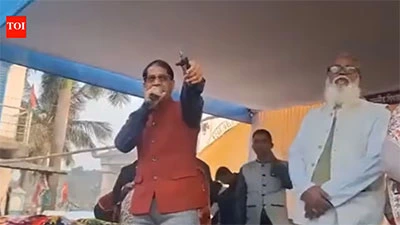
Such unrest is not seen in opposition-ruled states like Tamil Nadu or Kerala. The reason is clear. The rule of law exists there.
In those states, the administration controls every meeting and protest march. From that perspective, the Bengal administration appears almost like a silent spectator.
In other words, when a ruling system loses faith in its own justice, it begins to ignore the law openly.
Street Politics and Lawlessness in West Bengal
In Bengal, any street politics instantly becomes news. Even though this street politics has continued for years, the ruling establishment makes no serious effort to control it.
The reason is simple. The ruler cannot stand on moral ground. The government knows its own wrongdoing. Therefore, it fears taking firm action.
As a result, administrative control slips into the hands of local strongmen. Security may be tightened around Nabanna, but law and order across Bengal now rests with small-time neighborhood power brokers.
Is Akhilesh Losing Ground in Uttar Pradesh?
Akhilesh Yadav may praise Mamata Banerjee just to please her. He may even claim that Mamata defeated the ED and will now defeat the BJP.
But after making such an exaggerated statement, how will he explain it to Rahul and Priyanka in Delhi?
Is Akhilesh losing ground in his own state, Uttar Pradesh? Perhaps, he is. Slowly but Inevitably. After all, he is a potted plant as per Prashant Kishor.
After all, he joined hands with Rahul Gandhi in 2024 and cornered the BJP so effectively that the party was forced to run the government with just 240 seats.
Does Akhilesh truly believe that Mamata has defeated the ED? Did he also support the incident where state police allegedly seized files from ED officials?
Here again, the issue of the rule of law comes to the forefront. In a normal system, central investigating agencies do their job. At the same time, the state administration cooperates with them.
That is how governance is supposed to work.
Why West Bengal fails to maintain law and order in Bengal SIR Crisis?
Then why is West Bengal following the opposite path in Election Commission of India Bengal update?
When the leader herself leads such actions, the lower-level party workers naturally become overenthusiastic. Then why would they bother to respect the law, and for whose interest?
Today’s Bengal SIR crisis reflects this very reality.
There is no doubt that the Election Commission has lapses and errors. However, attacks on polling booths across neighborhoods tell a different story.
If the administration has to deploy RAF even in a relatively calm area like Khardah, then it is certainly not a positive sign for the state’s law and order situation.
Is Survival Crisis the root cause of Bengal SIR Crisis?
At present, local neighborhood leaders are facing a strange crisis of survival. Their first fear is whether the Trinamool Congress will remain in power at all. Even if it does, they worry about getting a party ticket.
The core issue is simple. When development loses its path due to the hunger for power and money, such existential crises naturally emerge.
Today’s office-bearers know very well how their personal wealth has grown in recent years. Therefore, they do not want to lose their positions at any cost.
They also know that once they lose office, they will no longer enjoy the huge flow of money distributed from panchayat to district levels.
Their palatial houses and luxury cars will no longer be theirs.
That is why they are desperate to create trouble by any means, hoping to increase their value in the eyes of the party’s top leadership.
According to reports, Farakka’s Monirul Islam was not sure of his ticket this time. So, by exploiting the Bengal SIR crisis, he is trying to grab headlines and secure his political future.
When a ruling party becomes desperate to stay in power, governance and justice no longer act as checks on each other.
In West Bengal, bureaucrats, police officers, and even local station OCs are appointed at the signal of top leadership. As a result, they avoid taking action against lawbreakers, because they fear falling out of favor with the ruling establishment.
When Administration and Political Parties Shake Hands in West Bengal Politics
The opposition alleges that police stations decide who becomes a local leader and where.
Along with this process, the IPAC agency is also involved. Although IPAC is officially a political consultancy, it is often present even in administrative meetings, which further blurs the line between governance and politics.
When Vote becomes the only ideology
When the ruling party decides tickets based not on honesty or development, but on how many votes a leader can capture or how effectively they can use muscle power, the problem only deepens.
The Bengal SIR crisis is a direct outcome of this mindset.
People Also Ask (PAA)
Why is the Bengal SIR crisis becoming a major political issue before the 2026 election?
The Special Intensive Revision (SIR) of the voter list has become a major issue because lakhs of voters are still under verification or adjudication. As the 2026 West Bengal Assembly election approaches, political parties fear that unresolved voter records could influence the final electoral roll.
Why are so many voters stuck in the SIR verification process?
Several factors have slowed the process, including:
- Large numbers of duplicate or disputed entries
- Migration and address changes
- Administrative workload on Booth Level Officers (BLOs)
- Legal objections filed by political parties
What is the purpose of the Special Intensive Revision (SIR)?
The SIR aims to clean and update the electoral roll. It removes duplicate or deceased voters and adds newly eligible citizens so that elections take place with an accurate voter list.
Could the Bengal SIR crisis trigger constitutional intervention?
Some political observers speculate that serious electoral disputes could invite legal scrutiny or constitutional debates, especially if the integrity of the voter roll is questioned.
Why are political parties closely watching the Bengal voter list revision?
The voter list directly affects electoral arithmetic and voter demographics. Therefore, political parties monitor the revision process carefully to ensure that their supporters are not wrongly excluded.
What role do Booth Level Officers play in the SIR process?
Booth Level Officers (BLOs) are responsible for ground-level verification of voters. They collect forms, verify addresses, check documents, and report discrepancies to election authorities.
What could happen if the Bengal voter list revision remains incomplete?
If the revision remains incomplete, it could lead to:
- Legal challenges in courts
- Political protests
- Questions about the credibility of the election process
Ultimately, the Election Commission would need to balance timely elections with an accurate electoral roll.