
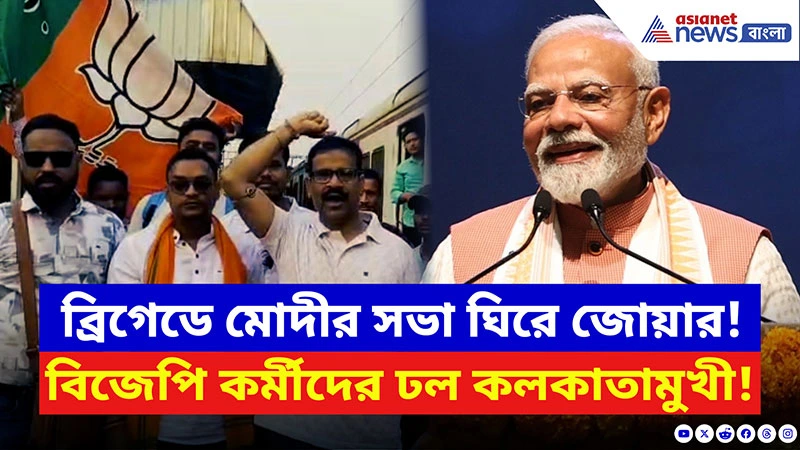
Modi Brigade Rally 2026: Girish Park Clash and Countdown Politics in West Bengal
West Bengal politics witnessed dramatic scenes ahead of the massive Brigade rally addressed by Prime Minister Narendra Modi. In addition, Amazing Modi Brigade came right after the Girish Park episode.
A violent clash near Girish Park and a strong counter-narrative from Trinamool Congress leader Shashi Panja turned the event nevertheless into a battle of perception, media messaging, and political symbolism.
This article explains the Girish Park confrontation, the strategy behind the “Amazing Modi Brigade,” and what it means for the 2026 Bengal election also.
What Happened at Girish Park Before the Brigade Rally?
The streets of North Kolkata reportedly turned tense on Saturday as clashes broke out between supporters of the Trinamool Congress (TMC) and the Bharatiya Janata Party (BJP).
Key highlights of the incident
- The confrontation took place near the Girish Park crossing.
- It happened nearly 30 minutes before the Brigade Parade Ground rally.
- Furthermore, Reports mentioned stone-pelting, glass bottle throwing, and injuries.
- Consequently, even some police personnel were said to be hurt.
- The Police later arrested around 9–10 individuals.
However, the political interpretation of the clash differed sharply.
BJP leaders alleged that their rally-bound supporters were attacked without provocation. On the other hand, Shashi Panja described the episode as a “staged drama” or hoax meant to divert media attention from the rally turnout.
Therefore, the incident quickly turned into a war of narratives rather than just a law-and-order issue.
Why Is Girish Park Politically Sensitive?
The Girish Park area in North Kolkata has long been considered a stronghold of the Trinamool Congress.
Political realities shaping perceptions
- TMC currently rules the state government.
- Opposition parties often claim they face organizational and administrative challenges.
- Critics also question police neutrality during political clashes.
As a result, many observers believe that political incidents in such areas immediately spark suspicion and propaganda battles.
How Did the Clash Become a Media Dominance Battle?
Modern elections depend heavily on media optics and social media narratives.
Competing narratives after the incident
TMC’s claim:
- The clash was designed to create a sympathy narrative.
- It shifted headlines away from rally turnout and administrative messaging.
BJP’s claim:
- Supporters faced targeted attacks.
- Thus, the incident showed governance failure and political violence.
Consequently, the Girish Park clash became an early preview of the communication war expected before the 2026 Bengal elections.
What Made the Amazing Modi Brigade Rally Different?
The rally at Brigade Parade Ground was not just another political gathering.
Several visible strategic changes stood out this time.
Cultural symbolism and stage design
- The rally stage resembled an 80-foot replica of the Dakshineswar Kali Temple.
- The theme focused on Bengali heritage and identity (“Bangaliyana”).
- Instead of slogans like “Jai Shri Ram,” speakers highlighted “Jai Ma Kali.”
This shift suggested a deliberate attempt to counter the “outsider party” perception faced by the BJP in earlier elections.
What Did Narendra Modi Mean by the “Countdown Has Begun”?
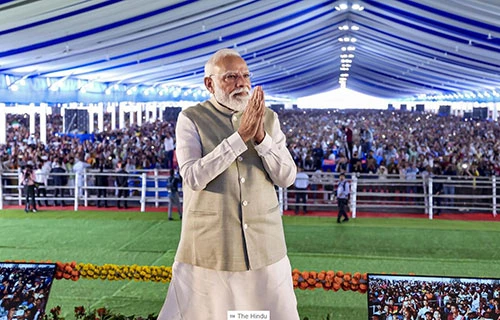
In his March 14, 2026 address, Narendra Modi repeatedly used the “countdown” metaphor to signal political momentum. ⏳
Main messages from the speech
- “Modika Guarantee” declared a countdown for those responsible for what he termed “Maha Jungle Raj” in the state.
- He promised accountability and action against corruption and extortion (“cut-money”).
- He argued that the huge rally turnout was proof of irreversible political change.
Moreover, Modi linked the countdown to:
- Freedom from fear among citizens
- Ending alleged infiltration and demographic concerns
- Restoring administrative transparency
Thus, the speech framed the election as a fight for the “soul of Bengal.”
How Has BJP’s Bengal Strategy Changed Since Earlier Brigade Rallies?
The 2026 rally signaled a clear shift from hopeful messaging to assertive political confrontation.
Strategic differences compared to previous campaigns
- New slogan: “Paltano Darkar, Chai BJP Sarkar” (Change is Needed, Want BJP Government)
- Hence, focus moved from seat predictions to a narrative of inevitability and governance change
- Direct criticism targeted government policies rather than personal attacks
- Emphasis on development announcements alongside campaign speeches
For example, projects worth around ₹18,680 crore, including the Kharagpur–Moregram Expressway, were highlighted during the rally.
Why Did Bengali Pride Become Central to the Rally Messaging?
Political analysts noted that the BJP attempted to connect more deeply with regional cultural sentiments undeniably.
Key symbolic moves
- Temple-inspired stage design
- Focus on Bengal’s spiritual traditions
- Reduced use of nationalistic slogans in favor of local cultural references
Therefore, the rally tried to reshape the party’s image from external challenger to cultural stakeholder.
Will the Girish Park Clash Impact the 2026 Election Narrative?
The clash has already influenced political discourse in several ways:
- It intensified allegations of political violence.
- The Clash sharpened debates about police neutrality and governance accountability.
- It reinforced the importance of media perception battles.
Both major parties now appear prepared for a high-stakes communication contest leading up to the Bengal Assembly polls 2026.
Is This Narendra Modi’s Final Major Bengal Campaign?
Some observers believe this election could be among the last major West Bengal Assembly election campaigns led personally by Narendra Modi at such intensity.
Interestingly, his tone reflected:
- Confidence, but not over-certainty
- Strategic emphasis on countdown rather than victory claims
- A broader narrative of development plus political change
Ultimately, the real verdict will come from voters.
The upcoming election results, expected on 04 May, 2026, may reveal whether the “Amazing Modi Brigade” strategy truly resonates with the Bengali electorate.
Final Thoughts
The events surrounding the Brigade rally highlight that West Bengal politics has entered a new phase defined by symbolism, media battles, and sharper ideological messaging.
From the Girish Park confrontation to the cultural framing of the rally, every move reflects a carefully crafted electoral strategy.
The countdown has indeed begun not only for political change debates but also for a decisive contest over public perception in Bengal.
Key Takeaways
- Girish Park Clash Sparks Political War: Violence near Girish Park before the Brigade rally triggered sharp allegations between BJP and TMC leaders like Shashi Panja.
- Narrative Battle Dominates Headlines: Both sides framed the incident differently, turning it into a media perception and sympathy politics debate.
- Police Inaction Raises Questions: Reports of delayed response and later arrests fueled controversy over law-and-order neutrality.
- Temple-Themed Stage Signals Cultural Strategy: The rally at Brigade Parade Ground used a Dakshineswar Kali Temple replica design to connect with Bengali sentiments.
- Shift from ‘Jai Shri Ram’ to ‘Jai Ma Kali’: Speakers including Narendra Modi focused more on regional cultural identity and Bangaliyana messaging.
- “Countdown Has Begun” Becomes Core Campaign Theme: Modi framed the rally as the start of political accountability and governance change in West Bengal.
- Aggressive New Election Slogan: BJP introduced “Paltano Darkar, Chai BJP Sarkar”, signaling a stronger push for power in 2026.
- Development + Campaign Combo Strategy: Projects worth ₹18,680 crore were highlighted, blending governance announcements with electoral messaging.
- Media Dominance Becomes Key Battleground: Real-time narrative control and social media optics now shape modern Bengal election politics.
- Big Question Ahead of Polls: Will the “Amazing Modi Brigade” strategy convert crowd energy into actual votes in the 2026 Assembly Election?
People Also Ask (PAA)
What happened at Girish Park before the Brigade Rally 2026?
A political clash reportedly broke out between supporters of rival parties near Girish Park in North Kolkata shortly before the massive rally at Brigade Parade Ground. The incident involved stone-pelting, injuries, and later police arrests, sparking strong political reactions.
Why did Shashi Panja call the attack a “staged hoax”?
Shashi Panja alleged that the incident was planned to create a media diversion narrative. According to her, the controversy shifted public attention from the rally turnout to claims of political victimhood.
What was unique about Narendra Modi’s Brigade Rally 2026 speech?
Narendra Modi used the “countdown has begun” message as a central theme. He framed it as the start of political accountability, governance change, and a broader ideological fight for West Bengal’s future.
Why was the rally stage designed like the Dakshineswar Kali Temple?
The temple-style stage symbolized an attempt to connect with Bengali cultural identity and religious sentiment. Political observers believe this strategy aimed to counter the perception that the BJP is an outsider party in the state.
How does the Girish Park clash affect the 2026 West Bengal election narrative?
The clash intensified debates on political violence, police neutrality, and media dominance. It also highlighted how perception battles and real-time narratives may influence voter sentiment before the Assembly polls.
What is the new BJP slogan for the West Bengal elections?
The slogan “Paltano Darkar, Chai BJP Sarkar” (Change is Needed, Want BJP Government) reflects a more assertive campaign tone compared to earlier hopeful messaging.
Did the Brigade Rally focus only on politics?
No. Along with political speeches, development projects worth thousands of crores were highlighted. This shows a combined strategy of governance messaging plus electoral mobilisation.